Home Blog Page 423

‘Winning the FA cup is more difficult than the Premier League’ – Hearts of Oak deputy coach Hamza Obeng

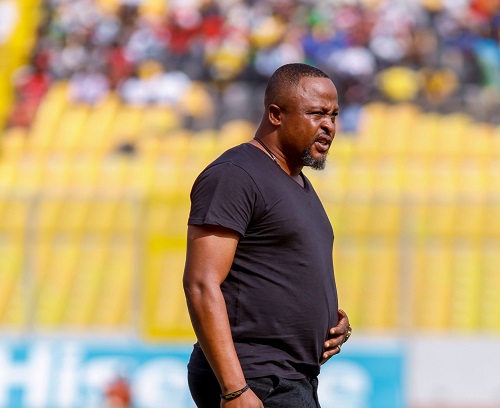
Assistant coach of Accra Hearts of Oak, Hamza Obeng reckons it is tougher to win the MTN FA cup than winning the Ghana premier league.

In spite of the fact that playing the league involves playing more games than the MTN FA cup, Hamza believes winning the league is quite easy compared to winning an FA cup.

Hamza speaking with Kessben TV underscored that most of the opponents in the MTN FA cup competition are opponents with little information about.

According to him, most of these clubs with less information about are the reason for the major surprises in the MTN FA cup competition.

Accra Hearts of Oak won the Ghana MTN cup while Kumasi Asante Kotoko won the 2021-22 Ghana premier league.

Both clubs for the first time in so many years will represent Ghana in the African club competition, the CAF confederation Cup and the Champions League respectively.

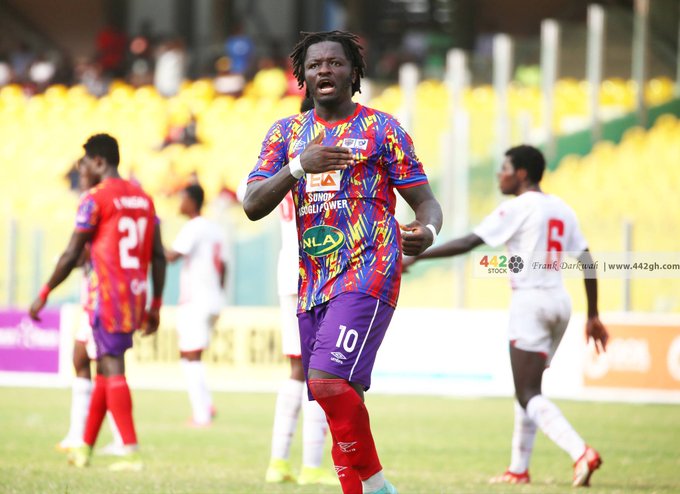
Sulley Muntari hints at staying at Hearts of Oak for another season

Legendary Ghanaian midfielder, Sulley Ali Muntari has hinted at being part of Hearts of Oak squad for next season’s CAF Confederation Cup campaign.

The 37-year-old signed a six-month deal with the Phobians after almost two years without a club as he seeks to give his career one last dance.

Rumors were rife that the former AC Milan and Inter Milan midfielder will leave the club after helping the Phobians clinch the MTN FA Cup and President Cup respectively.

However, Muntari has hinted that he will continue his marriage with the Phobians and be part of the team for Africa next season.

“I signed six months contract with Hearts of Oak and I will renew to be part of the team for Africa”

Muntari is expected to play a key role for coach Samuel Boadu’s team in the CAF Confederation Cup campaign which begins in September this year.

Otto Addo backs new Black Stars players to succeed

The past week has been very interesting for Ghana Football, with regards to the Black Stars.

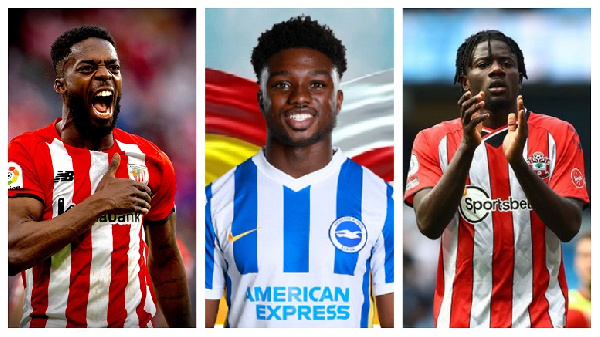
Athletic Bilbao ace, Inaki Williams’ announcement on his decision to represent Ghana, coupled with the Ghana Football Association also revealing same for Tariq Lamptey, Mohammed Salisu and others, was met with a lot of excitement.

However, amidst the fanfare, some questions have been raised, about how the influx of the new players would affect the harmony in current squad, and whether the sway of the World Cup influenced their decision to commit to the national team.

Ghana Head Coach, Otto Addo, who himself was born in Germany but chose to represent Ghana, has added his voice to the growing debate.

He believes the incoming players know exactly what they’re getting into, and trusts them to be successful for the national team.

“Since March we’ve been talking to a lot of players who we think can have an impact on the team,” he told the BBC.

“I can understand it can be a difficult decision, especially if you were born in another country and you’re young.

“It’s a lifetime decision, unlike at club level where you can play for a number of teams, so it’s very difficult and I understand them better, having being born in Germany.

“But we want those who have decided to get familiar with the team and the staff as soon as possible.

“So everybody who wants to join has to join now so they know exactly what they’re going to do,” he added.

Otto Addo also played down suggestions of the new players basing their decision to join on playing at the Qatar World Cup.

“It’s a tough decision and they know what they’re getting into. Surely it’s not just about this World Cup.

“It’s about more World Cups to come, AFCONs, winning and being successful, so it’s really not just about this one World Cup.”

Ghana will face Portugal, South Korea and Uruguay in the group stages of the FIFA World Cup in Qatar, which begins later in November.

‘We are preparing for next season’s Premier League’ – Demoted Ashgold coach Thomas Duah

Head Coach of demoted Ghana Premier League club Ashantigold SC, Thomas Duah is optimistic his side will compete in the 2022-2023 Ghana Premier League.

Ashantigold SC were demoted to Division Two following their involvement in a match-fixing incident recorded in the 2020-2021 football season.

According to Duah, they have appealed the decision but have not received any communique from the FA that they will play in the lower-tier of Ghana football.

“No one has communicated to us (AshGold) that we are going to play in Division Two. We have appealed the decision and yet to hear from the FA” he told Akoma FM.

Coach Duah reiterated that, it feels bad to be tagged with something you know nothing about because no one at the club engaged in betting.

“No one at the club engaged in betting and it feels bad when tagged with something you don’t know anything about(even in a car people tag me as part of the betting people. We (AshGold) have not been taken out of the GPL so we are preparing and ready for the up coming season but God forbid we go into Division Two, surely that will not happen.

He was quizzed as to what to do if the FA excludes Ashanti Gold SC from the upcoming season.

Should that happen, then it means all clubs will be playing in that zone (Division Two)”, he added.

The Miners finished 7th in the 2021-2022 campaign with 46 points after 34 games. However, the 2022-2023 Ghana Premier League will kick off on Friday September 9.

Asante Kotoko, Hearts of Oak, TP Mazembe in hot chase for Division One League top scorer

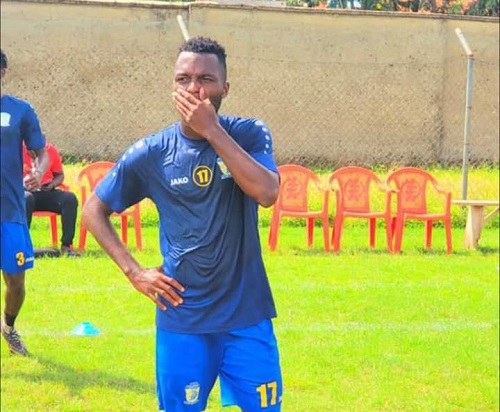
New Edubiase forward Isaac Mintah has popped up on the radar of five Ghana Premier League clubs following his outstanding performance.

The enterprising forward was instrumental for his side in the just ended Ghana football campaign having bagged 23 goals to win the Division One League Zone two top scorer award and the overall top scorer in the division and registering five assists and six MVP awards.

Mintah’s impressive form earned him a call up into the Black Galaxies and has become a subject of interest for several clubs in the country.

Asante Kotoko, Hearts of Oak, Medeama, Aduana Stars, Goldstars and Legon Cities have shown interest to request for the services of the striker according to club owner Abdul Salam Yakubu.

According to Abdul Salam Yakubu, they are ready to negotiate for the player’s transfer.

“A lots of Ghana Premier League clubs are chasing him, as well as other foreign clubs including TP Mazembe,” he told local media in an exclusive interview.

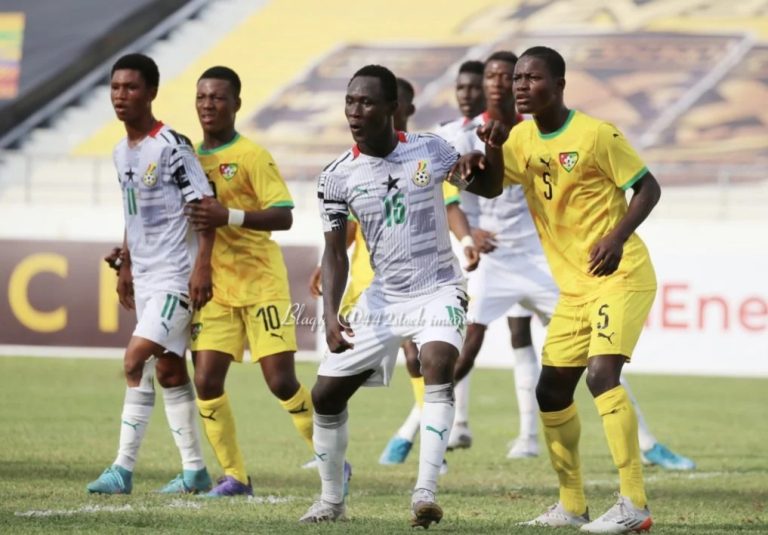
Isaac Mintah is currently in the Black Galaxies camp preparing for the CHAN qualifiers.

Nkrumah and football: how Ghana’s top players ended up in North America

0

African footballers have been migrating overseas since the 1920s, when French leagues attracted some West African players. The migration of African talent to Europe intensified from the 1980s to the 2000s as football became more globalised and economically viable.

Thousands of African footballers have since found their way to Europe. Many have succeeded in carving a niche for themselves, like Abedi PeleDidier DrogbaGeorge Weah and Samuel Eto’o. The performances of these stars have reinforced the perception that the African continent has some of the best football talent.

Less is known about the history of African footballers moving to North America. My own study of the migration of Ghanaians to leagues in the United States from 1967 to 1984 shows interesting connections between political, social, and economic influences and sports. In particular it highlights the influence of the country’s first post-independence president, Kwame Nkrumah, on the state of football in Ghana.

The knowledge and experience of former footballers is a useful resource for those who wish to promote the game and support the development of players.

Nkrumah’s vision for football

The research used a qualitative research method. We tracked down several players who played under Nkrumah’s regime and migrated to the United States to join the North American Soccer League. We also studied documents.

Nkrumah viewed the national football team as an extension of his pan-Africanist vision. He appointed an administrator who shared that vision in the person of Ohene Djan. His role was to grow sports in general and develop a national football league capable of producing a national football team to fulfil Nkrumah’s objectives.

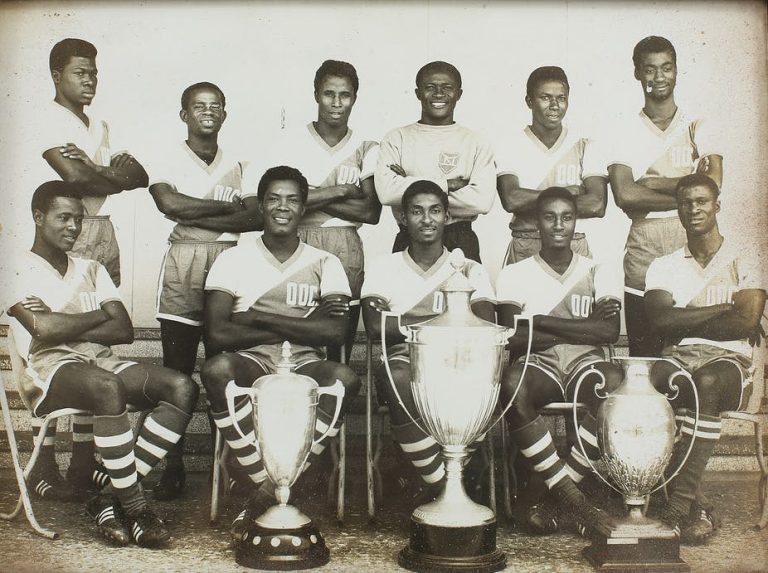
He did this successfully as Ghana’s national football team became the best on the continent, winning two continental titles in 1963 and 1965 . Domestic club sides like Asante Kotoko were also a force.

The popularity of football in Ghana brought enormous prestige, social respectability, and fame to football stars, especially to national team players. They were seen as international stars and were the “pampered darlings” of the general public. Former national goalkeeper Dodoo Ankrah described the feeling.

“We were proud of wearing the national colours because it was not easy to be invited to play for the team … anybody who plays for the national team was regarded as a hero and even the chief in the community takes you as a hero.”

By 1968, two years after Nkrumah’s overthrow, the country experienced an economic crisis  which affected sports development. Unemployment increased and social welfare was drastically reduced, making Ghana unattractive to foreigners and citizens alike. The country experienced a long period of economic difficulty, political instability and civil unrest. Conditions became counter-productive to the growth of football and national team players were left to find their own way of surviving.

Some players embraced migration opportunities to the North American Soccer League, where they met other African footballers.

Greener pastures

A number of factors led to the American league becoming the destination of choice for the players at the time. With the economic situation in Ghana showing no signs of improvement and football no longer the focus of attention for the new government, these players felt the need to look for greener pastures. The USA made sense as a destination because most of them had friends who had migrated there. The burgeoning football market was also a factor.

Footballers relied heavily on their social relations and networks acquired through fame and social status. One of them, Wilberforce Mfum, recapped his journey to the United States via Italy, where a former management member of Asante Kotoko SC – who was then an ambassador – hosted him.

This player explained the circumstances surrounding his migration after Nkrumah’s topple. At age 29, Mfum was still scoring goals in African competitions but the media put pressure on “ageing” national team players, leading to their exit.

He told of his final move to the North American league:

“I left Ghana on July 24, 1968. That time, we had played a match against Morocco’s national team for a World Cup qualifier and we lost 0–1 at Accra Sport Stadium, so other sportswriters including Kofi Badu were saying the Black Stars players are old so we should be sacked from the team. I was so lucky that three days after that match, I flew to the United States and was met by Boye Lomotey(a Ghanaian resident in the states) at the New York airport and he took me to Washington.

The pioneers of the North American Soccer League included Gladstone Ofori, a former Invincible Eleven FC player. Brothers Sam and Oliver Acquah played for Kumasi Asante Kotoko SC before moving to North America.

Most Ghanaian players played for Rochester Lancers Club between 1970 and 1978. Out of the total, only four were former Black Stars players. Others were Wilberforce Mfum, Abdul Razak and Frank Odoi, a former player of Great Olympics, who stayed 12 years in the North American Soccer League. They all enjoyed a reasonable level of success during their playing career in the United States. Back home, football went through an intermittent period of success but the focus that Nkrumah placed on the national team was not replicated.

The study of the migration of some of Ghana’s biggest football stars to the US after the overthrow of Kwame Nkrumah in 1966 adds to the literature on African football migration. This process continues today in the steady flow of football talents to the Major Soccer League in the US.

Source:theconversation.com

2022 Ashanti Regional Inter-School Boys Soccer Competition: Asanteman SHS eliminates host O’SEC/TECH to make semis alongside OKESS, OWASS [+SEMI-FINAL FIXTURES]

0

Coach Prince Acheampong ‘Tactical Sabuto’ has guided Opoku Ware School to qualify for the semi-final of the ongoing 2022 Ashanti Regional Inter-school Boys Soccer Competition at the Len Clay Stadium in Obuasi.

The Santasi-based school walloped Tweneboah Koduah SHS 3-0 to book a place in the semifinal stage.

They opened the scoring in the first half through the spot before Wilfred Addo increased the tally for OWASS to end the first half.

They will meet in the first semifinal encounter with record winners Osei Kyeretwie(OKESS) SHS.

OKESS eliminated Aduman SHS 4-3 on penalties after a 1-1 draw to advance to the semi-final place. OKESS took the lead before Aduman levelled to push the duel to penalties.

Asante Kotoko youth trainer, Abdulai Gazale also led T.I AMASS to beat Adanwomase SHS 1-0 to advance to the quarter final stage of the competition.

Below are results of matches played today;

ROUND 16

TOSS 0-0 O’Sec Tech

Penalties: [Toss 3-4 O’Sec Tech]

T.I AMASS 1-0 ADANWOMASE

KASS 1-0 JUABEN

QUARTER FINAL

OKESS 1-1 ADUMAN

Penalties: Okess 4-3 Aduman

OWASS 3-0 TWENEBOAH KODUAH

ASANTEMAN 1-1 O’SEC/TECH
Penalties: Asanteman 4-2 O’sec/Tech

T.I AMASS 1-0 KASS

DAY 5 [TUESDAY, JULY 12, 2022]

SEMI-FINALS

TIME : 9:00 AM

4 MATCHES

OKESS vs OWASS

ASANTEMAN vs [ T.I AMASS].

GRAND FINAL

FOOTBALL: The Belgian Way—Ghana must adopt new developmental strategies

By Edward  Gyasi

The Belgian people were frustrated, they’ve ‘had it up to here’ with constant disgrace in international competitions.

A group stage elimination from Euro 2000 as co-host brought an imperative retrospection of the developmental strategies of the Royal Belgian Football Association. Belgian football had hit rock bottom and things needed to change as soon as possible. Was Belgium a powerhouse of international football? No maybe, but the nationals felt they had nobody in the standards of legendary Jan Marie-Pfaff and Michel Preud’homme who took the Royal Belgium National team to the semifinals of the UEFA Europe Championship and  World Cup in 1980 and 1986 respectively.

Fortunately, Hakan Sukur’s two goals in Brussels on that evening of gloom, compelled the upper echelon of the Belgian Football Association to review the country’s strategies and take firm decisions. One that will require unflinching support from every Tom, Dick and Harry — change was imminent. Michel Sablon, the Technical Director of the FA admitted that change was necessary “It was not good for the players, not good for the clubs, not good for the national team, It really was the bottom, things need to change.” He said.

The despair of Euro 2000 birthed a new era. The FA and the heads of the technical department led by Sablon didn’t waste no more time in identifying new strategies for the development of their football. They needed grits, sacrifices, hard work and determination to effect the change they yearned.

Sablon told the CNN that the federation recruited four top universities to research the workload of youth players and find out the appropriate schedules for their new policies. They looked for an appropriate time for youth players to come together to train. The technical directorate recruited 70 coaches at all levels to analyze 1,500 youth games and make 120 PowerPoint presentations on their findings. The federation didn’t leave anything to chance, science and data were crucial to their new directives.

The traditional 4-4-2 formation system was scrapped to make way for 4-3-3 with dynamics or variations. This was a flexible system but required players to be more technical and responsible with the ball. Programs were drawn and shared to every professional club or football academy in the country. With lesser population, that wasn’t going to be too herculean, a task. Strategies were to be followed hook, line and sinker. Luckily, a consensus was made and every club bought into it and followed the plan religiously. They started training players who were 8years and above. Younger players were made to play with the older ones.

Ten years later, the nurtured flowers started to blossom —the coloration was so fine-looking, a sight to behold. Fruits were bore across the length and breadth of the country. Local teams started exporting players to top European teams even before they turned 18. This was historic, in 2000, only few players plied their trades outside Belgium, now they are everywhere. Kevin De Bruyne, Thibaut Courtois, Eden Hazard, Romelu Lukaku, Dedryck Boyata, Thorgan Hazard, Yannick Carrasco and many others who were between 8 to 10 years during the time of implementation of the strategy started to dominate world football. That was some quick returns on investment, wasn’t it?

The Belgian National team started shaping up steadily. The team sheet with the starting-11 and even those at the bench looked like a beautiful tapestry inside MUSEE D’ORSAY in Paris. Cognoscenti tagged them the golden generation of Belgian football. It was no fluke that they had one of the biggest leaps in FIFA Coca Cola National team rankings in 7years. Belgium were ranked 71st in June 2007, they were 5th by July 2014. Two years later, they were second. A bespoke plan for their football development has yielded dividends in less than a decade. Belgium is on the lips of every football fan. They have eventually become a powerhouse with arguably the best goalkeeper, the best midfielders and some of the best attackers in world football.  There was a careful plan and execution with robust supervision which was accepted by the leaders as well as the rank and file of the Belgian football.

Ghana’s football has hit rock bottom and nobody needs a soothsayer or a litmus test to validate. The signs are noticeable for even toddlers. Local premier league is ranked below Tanzania, Kenya, Mozambique, Angola, Ethiopia etc. No disrespect to the aforementioned countries but this is Ghana, we pride ourselves as the Brazilians of African football. This is a country that dominated African club and international competitions with countless grand finales and trophies. In terms of previous achievements, Belgium unlike Ghana had no reputation to protect but they were rather forthcoming with ideas.

There have been numerous red flags signaling the need for a change of our developmental strategies — if there’s any. Black Stars, early exit in 2019 AFCON, a retrogress in 2022, clubs failure to go pass first round of CAF club competitions, Women’s football missing out on championships, demise of youth football, few world class players in our talent pool are all indications that change is inevitable. What again could possibly trigger the inner Belgium out us? The upper echelon of Ghanaian football organogram needs to accept where we are at the moment before they can call the shot and effect changes in our football. If we can’t admit that we are in a deep abyss of crisis, then no change will be required at all. Unfortunately, unlike Sablon, Kurt Okraku, the leader of the Ghana Football Association sees no wrong at the moment. He was cock sure that Ghana was going to excel in the AFCON 2022.

“To put it blunt, I expect this team to go all the way. I’ve not seen a collection of young but united warriors like we currently have in this squad. Twenty Eight (28) warriors who are ready to represent their country, ready to make their country proud and I think the atmosphere around the team, the preparation, the work of the Technical team will eventually pay off.

I’ve always said that when it comes to talents, we can match up against any country in the African continent and this team is full of talents and the talent will show on the pitch and the team will compete very well in Cameroon.” He bragged.

Eventually it was a tournament to forget, a total disgrace for the four time champions. Belgium’s defeat to Turkey was far better than Ghana’s defeat to Comoros Island. Comoros Island? There was no better red flag to trigger our inner Belgium. However, we look unconcerned but hopeful that European born players with Ghanaian decent can turn things around and consequentially make our football flourish. No, that would be synonymous to a cow dung. Ghana must start from the scratch with timelines. That’s the only way she can return to its glorious days. The success story will trickle down from international football to club competitions. The cause and effect will be clearly understood by all stakeholders and talents will be harnessed across the length and breadth of the country.

In all these, incumbent government must understand the bigger picture and support the policies and strategies of the federation. Evidences are there to see, investment in football can yield dividends in multiple folds. Government must see football as a business enterprise just as a fruit factory, tourist’s sites and the other institutions and invest in it.  The leadership of the football federation need to trigger such a cause for action and others will follow suit. Inevitably, challenges will emanate but it will worth our while eventually. ‘Football the Belgian way’ is tried and tested but if its far-fetched, Ben Koffie et. al, had a strategy, ‘10year development plan’ which was successful to some extent. Why not adopt that?

 Change is the law of life and the only constant thing. This might be quite a cliché but if you fail to plan, you plan to fail. My Chinese friend always say “Plan your year in the spring and your day at dawn”.

By Edward Gyasi
Ghana FA Prez. Kurt Okraku meets reps of Coca Cola in Accra

0

Top Executives and Agency representatives of Coca Cola Beverage Company have met the leadership of the Ghana Football Association to discuss issues of mutual benefits.

The meeting which took place on Friday, July 8, 2022 discussed among other things the Coca Cola 2022 FIFA World Cup trophy Tour, plans and programs to make the tour exciting and possible partnerships between the two entities.

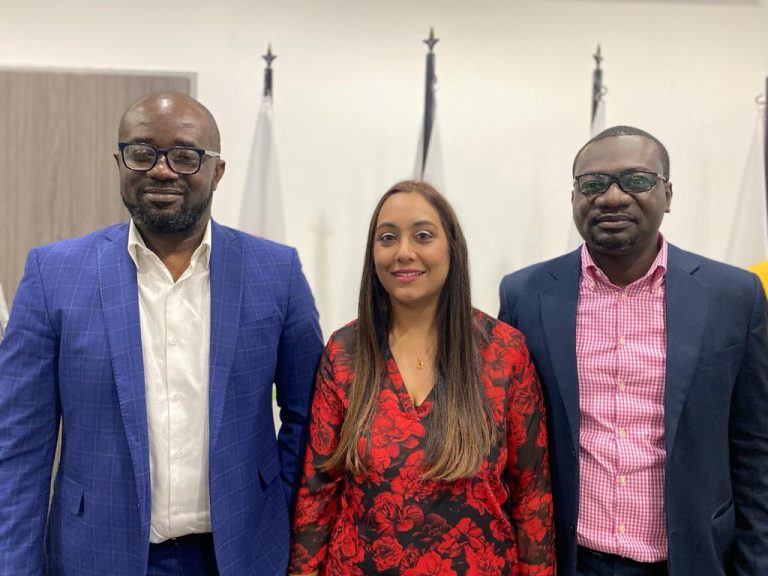
In the meeting, the Ghana Football Association was represented by President Kurt Edwin Simeon-Okraku, Director of Marketing Jamil Maraby and Director of Communications Henry Asante Twum.

‘’We feel proud and honoured to host this strong team from Coca Cola today’’ President Simeon-Okraku said.

‘’I think this has been made possible because on March 29, 2022, our gallant Black Stars wrote yet another history by fighting for the colours of our dear country – an incredible performance that won us the slot in Abuja’’

‘’I believe this meeting has come in handy since we have in the past discussed a few partnership possibilities for the growth and forward march of Ghana football’’ he added.

Philip Boadu Assah, Franchise Senior Manager, Equatorial Territory, Dr. Ayeshah Fauzee, Public Affairs, Communication and Sustainability Director, West Africa, Islands and Mid Africa Franchise and Eric Boamah, Public Affairs Manager, the Coca-Cola Bottling Company of Ghana Ltd were present in the meeting.

Others included Yaw Sakyi Afari, Head of RITE Sports, one of the agencies activating the Coca-Cola FIFA World Cup Trophy Tour, Kwabena Opoku – Brand planner West Africa Business Unit Equatorial – Coca-Cola Bottling Company and Peter Adamitey Senor Accounts Manager for Echo house Ghana Limited.

The Ghana Football Association and the Coca Cola Bottling Company will in the coming days break Communication on the FIFA World Cup Trophy Tour scheduled for Accra in September as part of the build up to the FIFA World Cup Qatar 2022 Tournament.

Ghana is one of the countries that have been selected to host the Trophy before the competition in November.

VIDEO: Good news as Thomas Partey arrives at Arsenal training ground to continue preseason

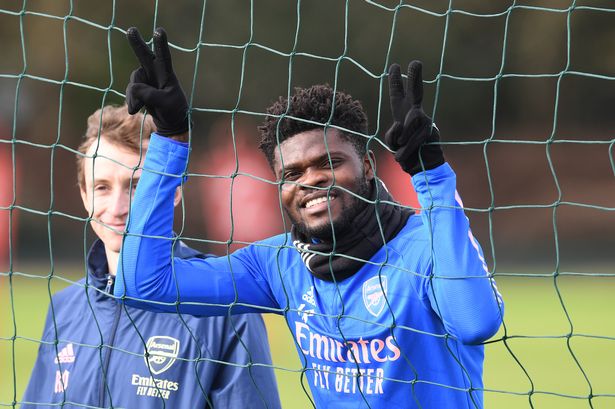
Ghanaian midfield star, Thomas Teye Partey has arrived at the training grounds of his club, Arsenal FC this morning.

Ghanaian football lovers can now breathe a huge sigh of relief after the player rejoined his teammates.

Reports emerged last week that Partey was embroiled in an alleged rape scandal involving two women.

It later emerged that prosecutors could not adduce sufficient evidence against the Player and hence the charges were dropped.

Sources have said that the allegations were cooked by the footballer’s Moroccan girlfriend following some differences between the two.

With Partey’s arrival to his team’s training ground this morning, it means the footballer can now focus on what he does best as the new English football season beckons.