After a disappointing run at the U23 Africa Cup of Nations in Morocco, Ghana’s Black Meteors have returned to the country. The delegation, consisting of players, technical staff, and team officials, left Morocco on Sunday evening and arrived in Accra early Monday morning.
The Black Meteors’ hopes of qualifying for the Olympic Games were dashed following a 1-1 draw against Guinea in their final Group A game last Friday. Needing a win to progress from the group stage, the team settled for a draw, leading to their early elimination.
In the match, Emmanuel Yeboah’s first-half goal was canceled out by a stunning volley from Guinea captain Ibrahim Fofona in the second half. Despite their efforts, the Guineans held on to progress to the tournament’s semi-finals, while Ghana exited at the group stage once again.
The technical team, led by Ibrahim Tanko, will now be expected to submit their report to the Ghana FA Executive Council for assessment. The Black Meteors have struggled to qualify for the Olympic Games since 2004 in Athens.
After the horrible events of the 1994 genocide against the Tutsi which saw over a million of lives lost, Rwanda has undergone sporting revolutionary mechanism to promote peace, unity and reconciliation through sports events.
During the country’s dark times in 1994 which spanned 100 days, the agony that people endured still haunted them but, thanks to sports, they have been able to overcome it and people are now living in unity.
As Rwandans celebrate the 29th anniversary of liberation, Times Sport takes a look at 10 best sporting moments which put smiles and joy back to Rwandans during the post-genocide era.
Amavubi’s 2004 AFCON qualification
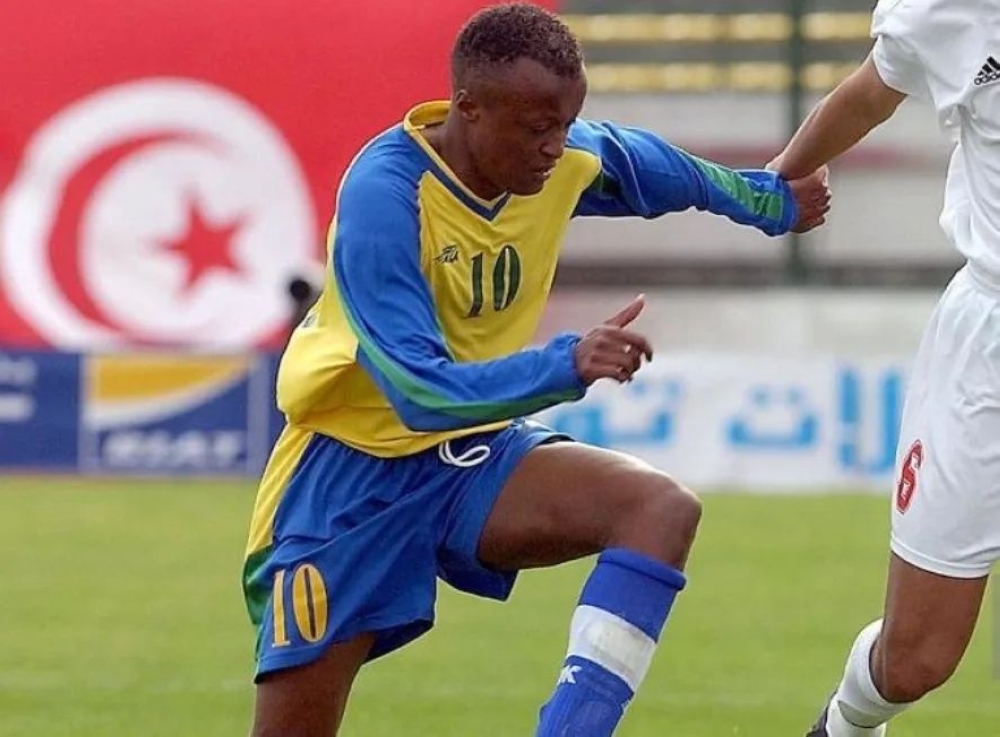
National football team striker Jimmy Gatete
The day Rwanda qualified for the 2004 AFCON in Tunisia remains up to date the best sporting moment that Rwandans have ever witnessed in the country’s history. It is an achievement that came in grand style as the country made their maiden appearance to the finals of Africa’s most prestigious football event ahead of four-time African champions Ghana.
On July 6, 2003, just nine years of healing from the wounds left by the 1994 Genocide against the Tutsi, Rwandans again found real joy in football the moment goal hero Jimmy Gatete scored a memorable goal that earned Rwanda their first ever AFCON qualification ever.
Amahoro Stadium in Kigali was filled to capacity as the legendary striker scored a 49th minute header against Ghana to send Amavubi to the 2004 AFCON in Tunisia.
All Rwandan’s celebrated the victory and qualification in one accord.
Arguably the greatest moment that Rwandans have ever witnessed,
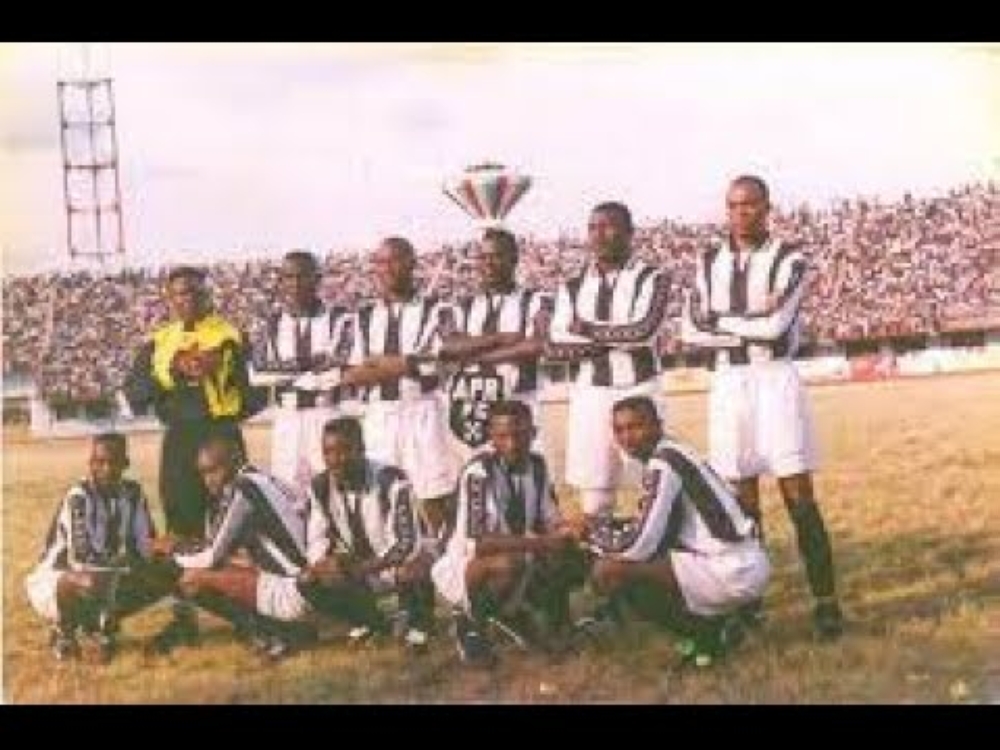
For someone like Karekezi who lost his mother and two elder brothers in the genocide it was not easy, but soon, he managed to move on. He and the other players joined forces together and helped APR to reach the semifinals of the 2003 CAF Cup Winners Cup.
It brought joy to the whole country and the sense of unity and patriotism was massive considering APR is an army club.
That semi-final berth remains the military side’s biggest achievement. The club has been chasing it or doing even better but it has still stood out as a record hard to beat.
Amavubi U17 World Cup 2011 qualification
Amavubi U17 World Cup 2011 qualification
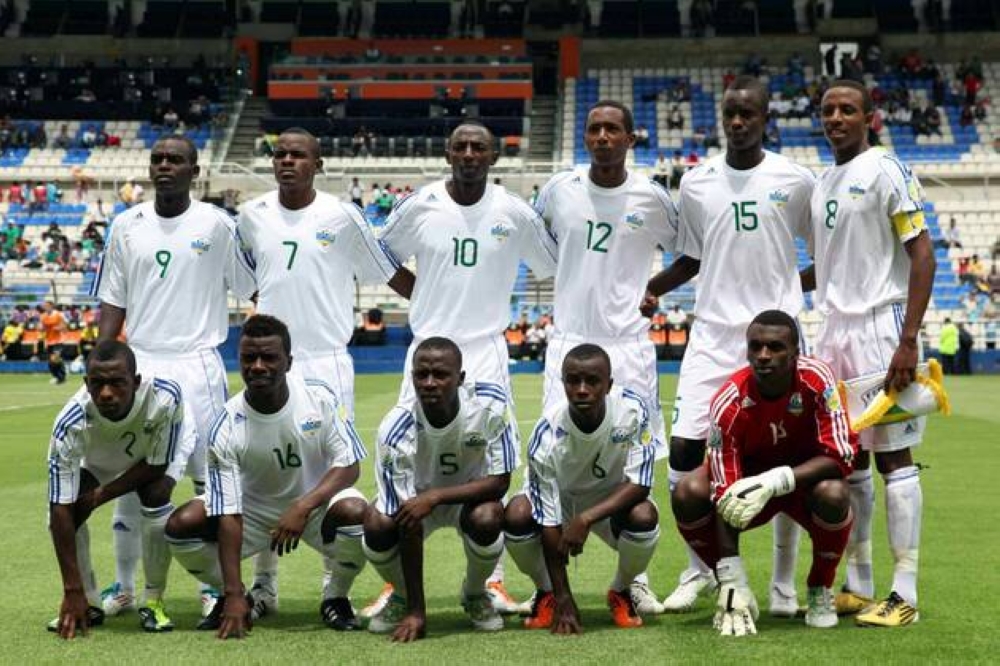
Rwanda booked their ticket to the 2011 FIFA U17 World Cup in Mexico following a 1-0 victory over Egypt on January 11, 2011 through a Faustin Usengimana winner at Kigali Stadium in the second game of Group A.
The goal ensured that the then AFCON U17 host nation grabbed one of the four slots reserved for Africa for the World Cup in Mexico and it remains the country’s only appearance at the world cup in any football level.
Rwanda went all the way to the final of the U17 AFCON before losing 2-1 to Burkina Faso. They, however, bowed out of the group stages of the world cup, finishing at the bottom of Group C behind England, Uruguay and Canada.
Salima Mukansanga, first African woman to officiate in World Cup
Rwanda is a country that champions gender equality and fights to promote women in various sectors and sports has not stayed behind.
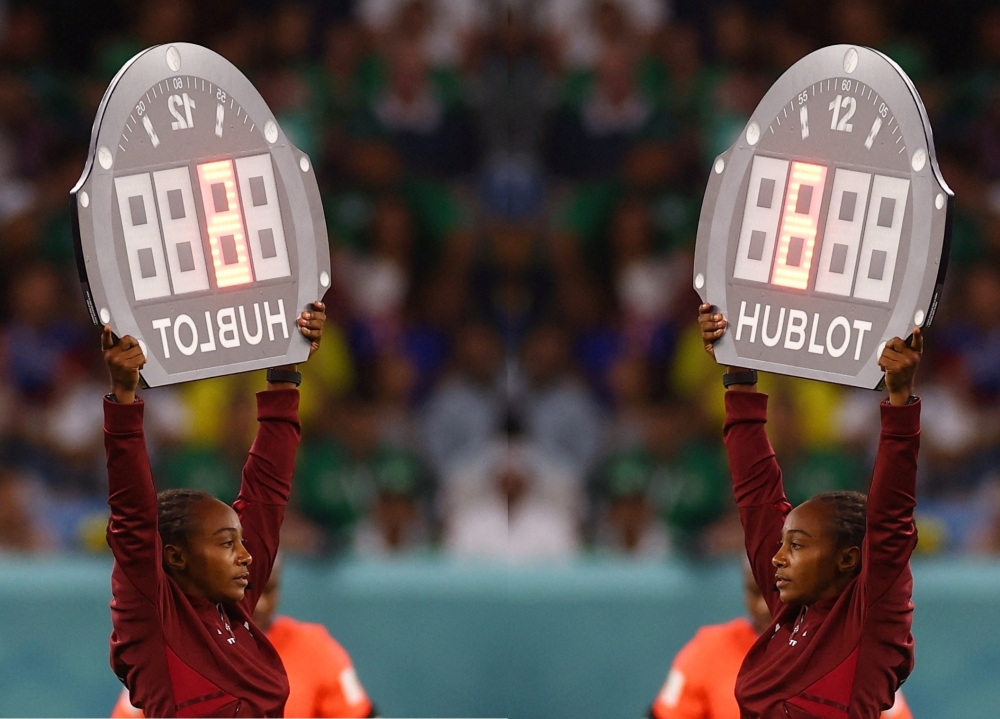
Rwandan referee Salima Mukansanga shows the stoppage time during the game as France face Australia on November 22, 2022. Courtesy
It’s a moment that she never imagined until she found herself on the final list of referees that the football governing body selected to officiate the 2022 FIFA World Cup slated from November 21 to December 18 in Qatar.
Mukansanga’s selection cemented a true definition of how far Rwanda has gone in supporting women to excel in their various professions including sports.
More achievements are coming her way as she is expected to officiate at FIFA Women’s World Cup that will take place in Australia from July 20 to August 20.
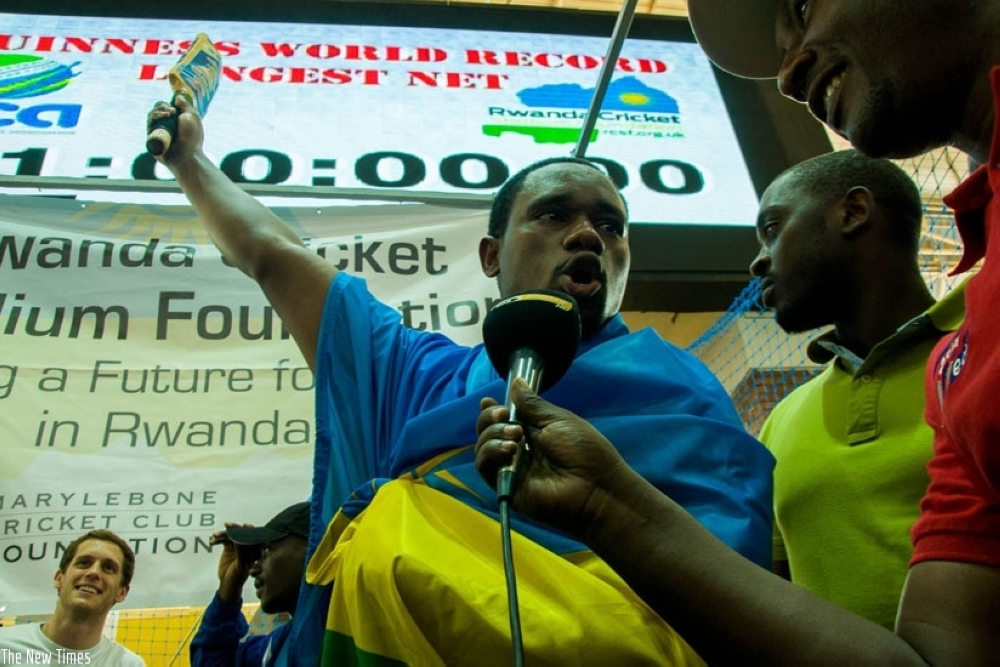
Eric Dusingizimana sets Guinness world record in cricket
In May 2016, Rwanda international cricketer, Eric Dusingizimana set a new world record for the longest time spent batting in the net.
The then national cricket team captain spent 51 hours batting at the indoor Amahoro Stadium.
Eric Dusingizimana sets Guinness world record in cricket
On February 16, 2017 also, Rwandan female cricketer Cathia Uwamahoro broke a Guinness world record for the longest cricket net session.
She then set a new one by batting 26 hours. Mention can also be made of Eric Dusingigizimana who also spent 51-hour batting to set a world record in May 2016.
The duo’s achievement didn’t go to waste, they helped in raising funds to build the Gahanga Cricket Stadium which, upon completion, has since hosted many international cricket tournaments. They have also inspired the young generation to venture into the fast growing sport which is gaining momentum in Rwanda.
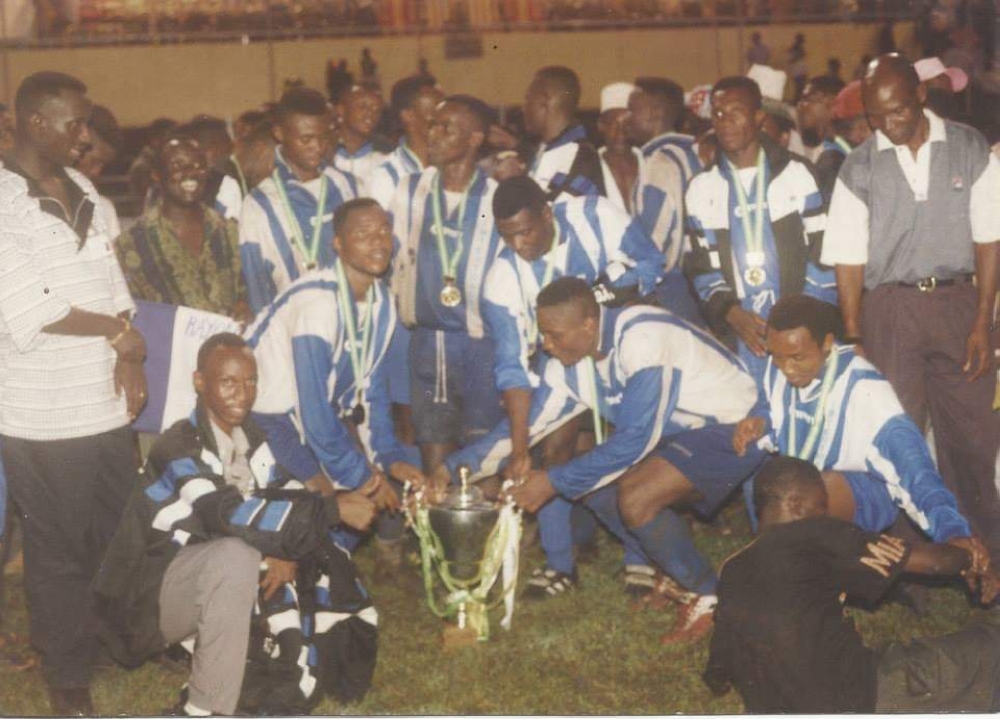
Rayon Sports win 1998 CECAFA Cup
Just one year after Rwanda’s admission to become a member of the Council for East and Central Africa Football Associations (CECAFA), Rayon Sports brought joy to all Rwandans when they won the 1998 CECAFA Cup and beat Mlandege FC of Zanzibar 2-1 in the final.
Rayon Sports win 1998 CECAFA Cup.File
The Blues had seen off Tanzania giants Yanga 3-1 in the semifinals in another great outing. The triumph in the competition brought togetherness to Rwandans as they believed they can achieve greater things if they stand against divisionism.
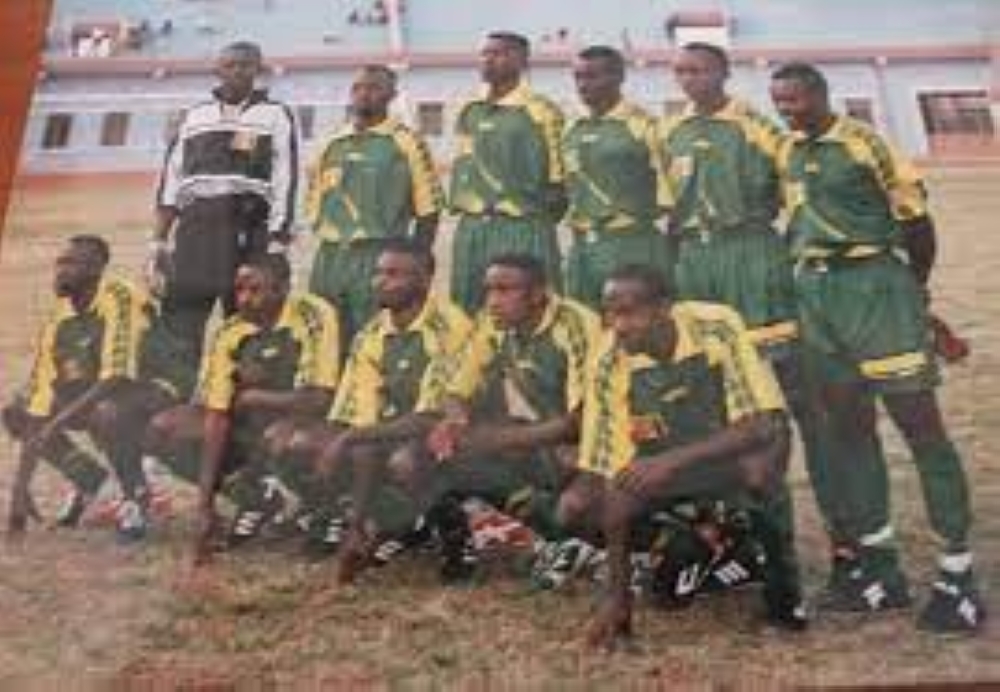
Rwanda B CECAFA Cup glory
Just two years after being admitted as a CECAFA member, Rwanda hosted the 1999 edition and was at the time represented by two teams, A and B which were likely to face off in the final.
Unfortunately, the A side lost 4-1 to Kenya on penalties in the semifinals after regulation time had ended goalless and the B team also beat Burundi 2-1.
Rwanda B CECAFA Cup glory
The B team went on to beat Kenya 3-1 in the finals while the A team also beat Burundi 3-2 on penalties to place third. That was when Rwandans started to find comfort and happiness in sports, especially football. That glory stands out as one that started to bring Rwandans together to support one nation and leave aside their differences.
Valens Ndayisenga’s Tour du Rwanda glory
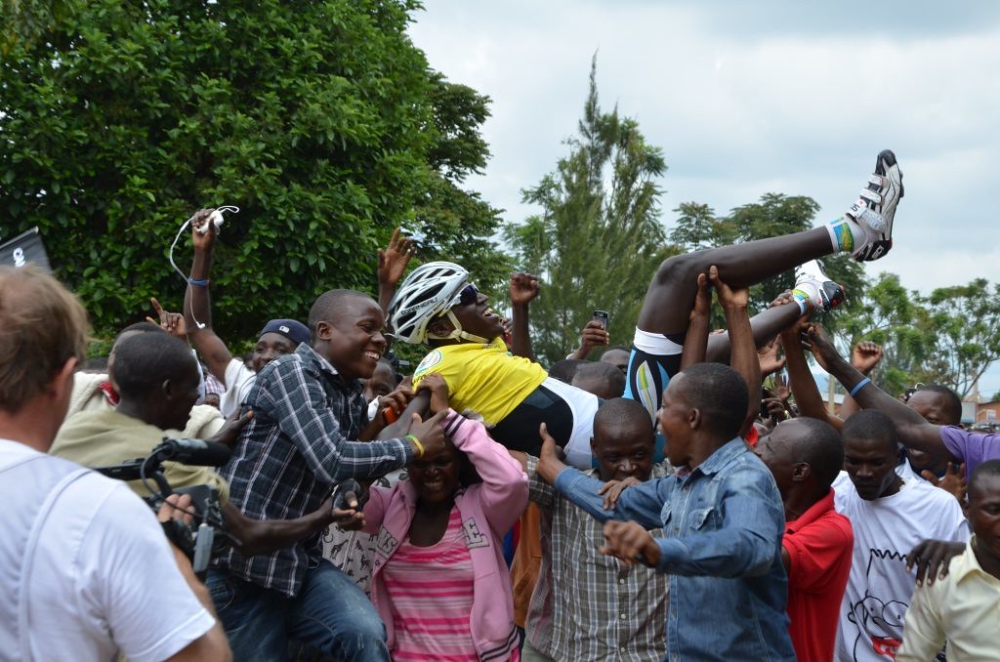
Ndayisenga won the 2014 edition of Tour du Rwanda which is arguably the biggest cycling event on the African continent.
Valens Ndayisenga Tour du Rwanda glory in 2014
Since the inception of the competition in 2009, no Rwandan cyclist had won it as it had always been dominated by foreigners but Ndayisenga broke the jinx. His glory was followed by a significant evolution of the sport which had gone to be one of the most followed sports in the country.
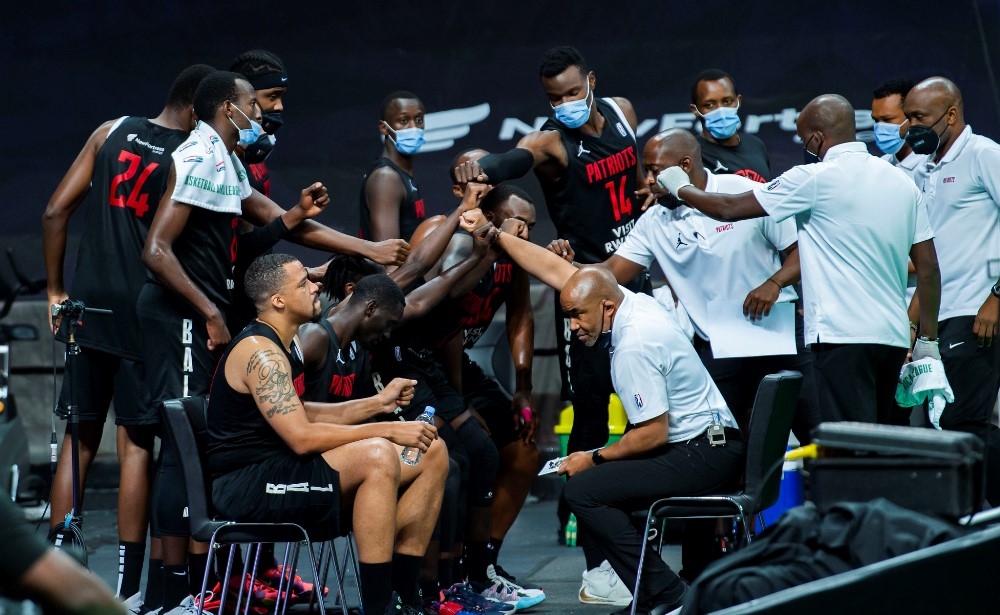
Patriots’ semifinal berth in BAL
Basketball currently stands out as one of the sports with growing fan base in Rwanda and that prompted the country to venture into the game by building the Kigali Arena which eventually hosted the inaugural season of the Basketball Africa League, a tournament that brings together African elite basketball clubs.
Patriots were in their prime and reached the semifinals although they were knocked out by Tunisian giants US Monastir.
Patriots were in their prime and reached the semifinals although they were knocked out by Tunisian giants US Monastir. Despite the elimination, the semifinal remains the best achievement by a Rwandan club since the competition’s inception in 2021.
Rwandans have been looking for the same show from Rwanda Energy Group, but they couldn’t deliver as anticipated during the past two editions.
Frederick Acheampong, Chairman of the Black Meteors Management Committee, has identified weak defense as the primary reason for Ghana’s underperformance at the U23 AFCON tournament in Morocco.
Acheampong acknowledged that defensive lapses cost the team dearly, resulting in their early exit from the ongoing tournament in North Africa. Despite showing promise in front of goal, Ghana conceded eight goals in three matches, dashing their hopes of qualifying for the 2024 Olympic Games.
“During the qualifiers, our defense was a department we had high hopes for. We only conceded two goals in four games, so it seemed like our strongest area. However, when we arrived at the tournament, there were changes,” Acheampong explained during an interview with 3FM on Sports Ultras.
He further explained, “Alex Opoku couldn’t participate in the tournament, forcing the coaches to make adjustments. Unfortunately, our once robust defense became our weakest link, and we ended up conceding eight goals in three matches, which is not satisfactory.”
The Black Meteors’ dream of Olympic Games qualification was shattered after a 1-1 draw against Guinea in their final Group A game last Friday. The team needed a victory to progress from the group stage to the semifinals but settled for a draw, resulting in their early elimination.
Guinea’s captain, Ibrahim Fofona, cancelled out Emmanuel Yeboah’s first-half opener with a beautiful volley in the second half. Ghana’s exit at the group stage marks another disappointing tournament for the team.
Ghana local football is in a state of crisis, with many experts and fans alike agreeing that the sport is lacking a clear vision and direction. This is not just a problem for the sport itself, but also a reflection of a wider issue within the country – that of a visionless state.
In recent years, Ghanaian football has been plagued by a lack of investment and poor management. This has led to a decline in the standard of play, with the national teams struggling to compete on the international stage. The local leagues and clubs have also suffered, with many facing financial difficulties and a lack of support from the government and private sector.
This lack of investment is particularly troubling when considering the potential of football in Ghana. The country has a rich footballing heritage, with many talented players and passionate fans. However, without the necessary resources and support, this potential is being wasted.
One of the key issues facing Ghanaian football is a lack of infrastructure. Many of the country’s stadiums are in a poor state of repair, with some even considered unsafe for players and fans. This is a major barrier to the development of the sport, as it limits the ability of clubs and leagues to generate revenue through ticket sales and other means. Additionally, there is a lack of grassroots football programs in Ghana. This means that young players are not being given the opportunities to develop their skills and reach their full potential. This is a major problem, as it means that the country will struggle to produce the next generation of top-class players.
The lack of investment and support for football in Ghana is not limited to the sport itself. The country as a whole is facing a crisis of leadership and vision. The government has been criticized for its lack of clear policies and direction, with many citizens feeling that their leaders are not doing enough to address the country’s problems.
This lack of vision is also reflected in other areas of Ghanaian society. The economy is struggling, with high levels of poverty and unemployment. Education and healthcare are also in a state of crisis, with many citizens unable to access the services they need. It is clear that the problems facing Ghanaian football are not just limited to the sport itself. They are a reflection of a wider issue within the country – that of a visionless state. The government and other leaders must take action to address these problems and provide the support and resources necessary for football and other sectors to thrive.
This means investing in infrastructure, developing grassroots football programs, and providing financial support for clubs and leagues. It also means taking a long-term approach to development, with a clear vision for the future of the sport and the country as a whole.
Without this, Ghanaian football will continue to decline, and the country will struggle to reach its full potential. It is time for the government and other leaders to step up and take action to address this crisis and provide a brighter future for football and Ghana as a whole.
Football has become the easiest source of income for Ghana in the past few years. Ghanaian footballers playing in foreign leagues send a significant portion of their earnings back to their home country. These remittances from footballers have become a vital source of income for many families and communities in Ghana, providing much-needed financial support in a country where poverty is still a major issue. In addition to the numerous companies set up by European based footballers
One of the most notable examples of this trend is that of Asamoah Gyan, a Ghanaian striker who played for clubs in Italy, the United Arab Emirates, and China. Gyan, who is considered one of Ghana’s greatest ever footballers, regularly sent money back to his home country to support his family and community. In addition to Gyan, there are many other Ghanaian footballers playing abroad who are also sending money back to their home country. The impact of these remittances from footballers on Ghana’s economy has been significant. According to the World Bank, remittances from abroad account for around 10% of Ghana’s GDP, with a significant portion of this money coming from footballers. This money has not only helped to support families and communities, but it has also been used to fund projects and initiatives aimed at improving the lives of Ghanaians. For example, many footballers have used their money to build schools, hospitals, and community centers in their home towns and villages.
Additionally, the success of Ghanaian footballers abroad has also helped to promote the country’s image and boost its tourism industry. As more and more people become aware of Ghana’s footballing talents, they are also learning about the country’s rich culture and history, leading to an increase in tourism.
It is clear that remittances from footballers have played a significant role in Ghana’s economy and have helped to improve the lives of many Ghanaians. As the country continues to develop and more of its footballers find success abroad, it is likely that this trend will continue and that remittances from footballers will continue to play an important role in Ghana’s economy.
It is clear that a very good investment in football will reap dividends at the long run. This isn’t a rocket science, obvious analysis that the leaders of the country are aware of. However, they only philosophize and are at present, incapable of hardworking.
From the streets to the stadiums, the passion and excitement for the game is undeniable. the Ghana Football Association (GFA) plays a crucial role in the development of the sport at a national level, it is not enough to sustain the growth and success of football in Ghana. It is imperative that local football development goes beyond just the GFA in order to truly thrive.
The government has failed in it’s power to develop the basics or the roots of the game. The focus is always on the Blackstars or the national teams. Meanwhile, “the Blackstars” is like a fruit on top of a tree, it blossoms when the tree is well nurtured overtime.
Former Ghana International Emmanuel Agyemang-Badu believes that football in the country is in serious trouble if the local league can’t produce quality talents at the youth level to perform creditably at major tournaments.
Ghana has qualified for almost every major tournament in men’s football in the last four years, but the outcome leaves much to be desired, calling for huge criticism from the football fraternity locally.
According to Badu, the local league in Ghana should be able to generate quality players to compete at the highest levels.
He insisted that the inability of the local league to produce enough quality at the youth level means that where Ghana’s football is heading to is dangerous.
He called on the hierarchy of the football governing body to hold an emergency meeting to find a lasting solution to the problem at hand.
“How can we be so over-reliant on IMF (foreign-born and foreign-based) players at the youth level? If the local league can’t produce players for our youth football, then we’re in serious trouble,” he told Joy Sports in an interview.
“The GFA needs to organise an emergency meeting tomorrow and take stock of what is happening. Where our football is heading is dangerous.”
Badu took the final penalty that handed Ghana’s Black Starlets and Africa the 2009 FIFA U-20 World Cup trophy against Brazil.
He featured at the 2010 and 2015 Africa Cup of Nations finals, where Ghana lost to Egypt and Ivory Coast, respectively.
Former Ghana International Emmanuel Agyemang-Badu believes that football in the country is in serious trouble if the local league can’t produce quality talents at the youth level to perform creditably at major tournaments.
Ghana has qualified for almost every major tournament in men’s football in the last four years, but the outcome leaves much to be desired, calling for huge criticism from the football fraternity locally.
According to Badu, the local league in Ghana should be able to generate quality players to compete at the highest levels.
He insisted that the inability of the local league to produce enough quality at the youth level means that Ghana’s football is in a mess.
“How can we be so over-reliant on IMF (foreign-born and foreign-based) players at the youth level? If the local league can’t produce players for our youth football, then we’re in serious trouble”, he told Joy Sports in an interview.
Badu took the final penalty that handed Ghana’s Black Starlets and Africa the 2009 FIFA U-20 World Cup trophy against Brazil.
He featured at the 2010 and 2015 Africa Cup of Nations finals, where Ghana lost to Egypt and Ivory Coast, respectively.
FIFA has released the pots for the African qualifying draw for the 2026 World Cup, which will be co-hosted by Canada, Mexico, and the United States.
Ghana, the four-time African champions, have been placed in Pot 2 and could potentially face Nigeria, their longtime rivals, in the qualifying campaign.
Ghana’s placement in Pot 2 means they could also come up against tough opponents such as Algeria, Egypt, Morocco, Senegal, Tunisia, Cameroon, Mali, and Ivory Coast.
The draw, scheduled to take place on July 12, will determine the groups for the qualifying campaign leading up to the 2026 tournament.
FIFA divided the countries into six pots based on the latest world ranking. Unfortunately, Ghana, ranked 11th on the continent, did not make it into Pot 1, reserved for the highest-ranked teams. As a result, the Black Stars will face a challenging path to secure qualification for the prestigious tournament.
The qualifying draw will see the countries placed into nine groups of six teams each. The group winners will earn direct qualification to the 2026 World Cup. However, the four best second-placed teams will compete in a mini-tournament, with the winner advancing to an intercontinental playoff.
The possibility of a playoff rematch between Ghana and Nigeria, reminiscent of their previous encounter for the 2022 World Cup qualification, looms. In that thrilling playoff, the Black Stars emerged victorious on away goals, securing their place in the tournament held in Qatar.
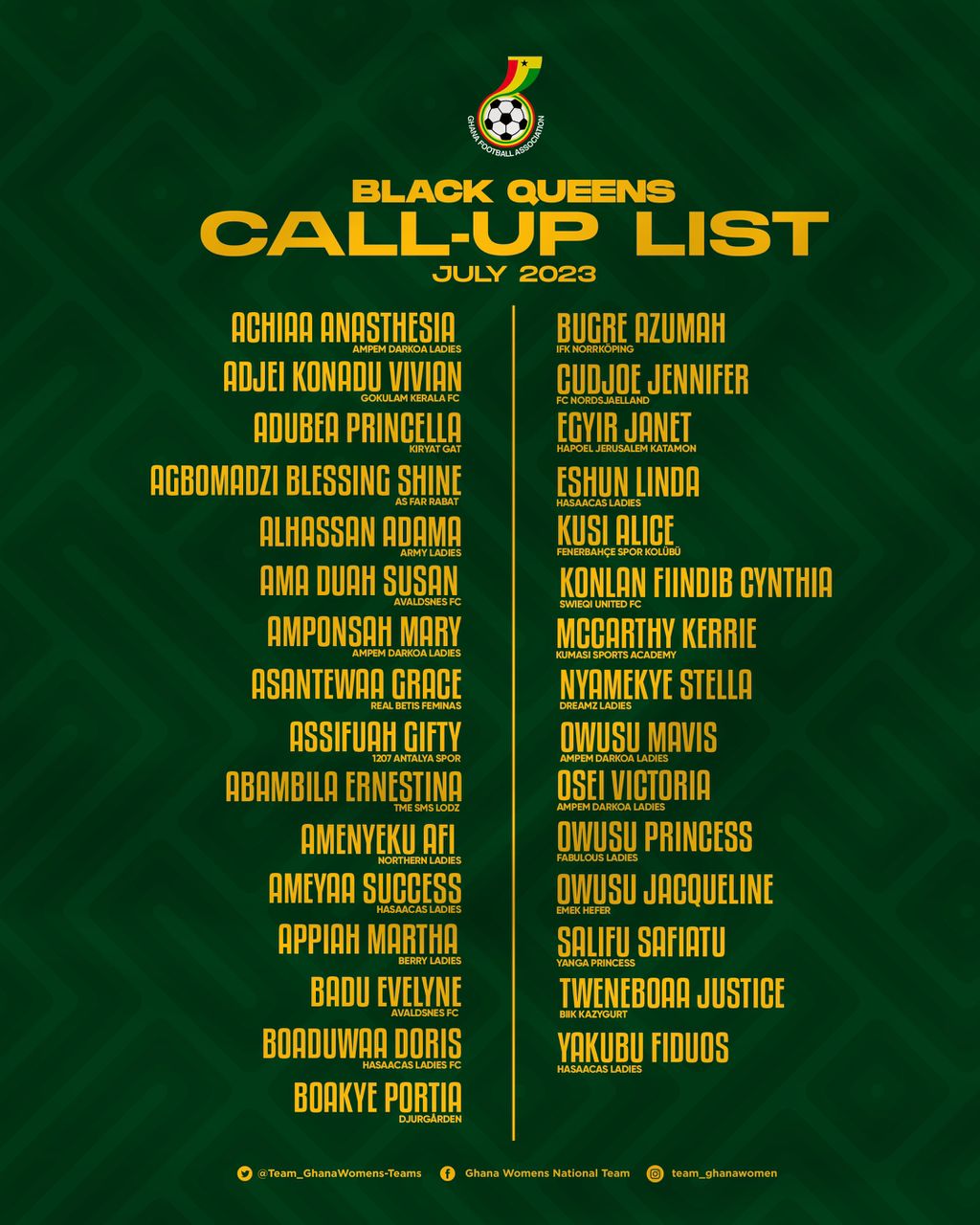
Black Queens, Nora Häuptle has named a provisional squad list for the upcoming Paris 2024 Olympic Games Qualifiers against Guinea.
Northern Ladies and Black Princesses shot-stopper Afi Amenyaku has earned her debut senior call up following her heroics at the recent WAFU B U-20 Girls Cup of Nations in Kumasi.
Also in the squad are trio Ernestina Abambilla, Jennifer Cudjoe and Alice Kusi who return after a long absence.
Camping officially opens on Monday, July 3 at the GFA Technical Centre (GSCE), Prampram at 4:00pm.The first round fixtures against Guinea is scheduled between 10 – 18, July, 2023.
Derek Boateng, a former midfielder for the Ghana national team, has expressed his dissatisfaction with the Ghana Football Association (GFA) due to the country’s recent lack of success in football.
While some national teams, such as the Black Satellites and Black Princesses, have achieved notable successes, overall progress has been limited since Kurt Okraku assumed the presidency of the association.
The most recent disappointment came from the Black Meteors, who were eliminated from the U-23 Africa Cup of Nations after a disappointing 1-1 draw with Guinea, resulting in a third-place finish in Group A. This outcome also means they will not be able to qualify for the upcoming Olympic Games in Paris.
Speaking on Joy FM, Boateng, who previously represented Ghana’s youth teams before advancing to the Black Stars, attributed the lack of success to the FA’s interference in the coaches’ decision-making process.
Boateng stated, “The FA owns a lot of players in the national teams, and that’s why we don’t perform. When CK [Akonnor] was in charge, the FA dictated the type of players he should call up, and when things didn’t go well, they removed him from his position.”
Renowned TV personality and football enthusiast, Nana Aba Anamoah, has strongly criticized Kurt Okraku, the President of the Ghana Football Association (GFA), for what she perceives as a decline in the performance of Ghana’s national teams.
Anamoah expressed her disappointment in the state of Ghanaian football following the Black Meteors’ exit from the 2023 U-23 AFCON tournament in Morocco. She directed her criticism towards Okraku, accusing him of failing to address the crisis.
In a tweet, Anamoah condemned the perceived lackluster performance of the national teams and challenged the notion that Okraku had “overachieved.” She accused those praising him of being dishonest and self-seeking individuals.
“The embarrassment is suffocating. No, @kurtokraku you haven’t ‘overachieved’. Those singing these praises to you are greedy, self-seeking dishonest people. Listen to the majority who tell you that our football is in crisis. You know it is.”
Anamoah further emphasized the widespread embarrassment felt by Ghanaians regarding the state of football and expressed her shock at the apparent complacency of the football authorities. She urged Okraku to pay attention to the concerns of the majority, who believe that Ghanaian football is in a state of crisis.
The embarrassment is suffocating.
No, @kurtokraku you haven’t ‘over achieved’. Those singing these praises to you are greedy, self seeking dishonest people.
Listen to the majority who tell you that our football is in crisis. You know it is.
The critique by Nana Aba Anamoah resonates with the sentiments of many Ghanaians who have expressed disappointment and concerns about the current state of Ghanaian football under the leadership of the Ghana Football Association. The early exits from various competitions have led to growing frustration among football enthusiasts and supporters.